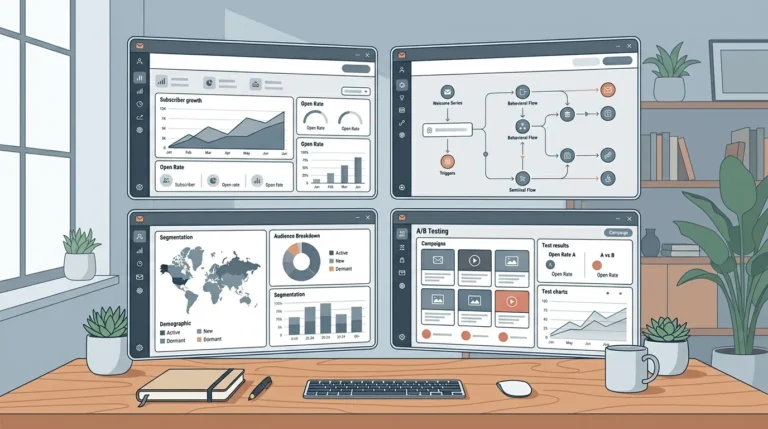

Email marketing is no longer just about sending newsletters. In 2026, it has evolved into a highly strategic, data-driven system that can directly impact your revenue. Businesses that understand how to use email effectively are consistently generating sales, while others are stuck sending emails that get ignored.
If your goal is simple — more sales — then this guide will walk you through the most effective email marketing strategies that are actually working right now.
Why Most Email Campaigns Fail
Before we talk about winning strategies, let’s address the problem.
Most businesses fail because:
- They send generic emails
- They don’t segment their audience
- They lack automation
- They focus on selling too early
Email marketing is not about blasting messages — it’s about building relationships that convert into sales.
Strategy 1: Focus on Lifecycle Email Marketing
Not every subscriber is ready to buy immediately.
You need to guide them through a journey:
- Awareness
- Interest
- Decision
- Action
Example:
- New subscriber → Welcome email
- Interested user → Educational emails
- Ready to buy → Offer email
This is called lifecycle marketing, and it significantly increases conversions.
Strategy 2: Use Email Automation (Your 24/7 Sales Machine)
Automation is the backbone of modern email marketing.
Instead of manually sending emails, automation works in the background based on user behavior.
High-converting automations:
- Welcome series
- Abandoned cart recovery
- Post-purchase follow-up
- Re-engagement campaigns
These emails are triggered at the right time, making them far more effective than regular campaigns.
If you want to implement advanced automation systems, you can explore:
👉 https://emailmarketingzilla.com/services/
Strategy 3: Personalization is Non-Negotiable
Generic emails don’t work anymore.
Personalization goes beyond just using the first name.
Advanced personalization includes:
- Product recommendations
- Behavior-based emails
- Location-based offers
- Purchase history targeting
When emails feel personal, they get opened, clicked, and converted.
Strategy 4: Segment Your Email List Like a Pro
Sending the same email to everyone is one of the biggest mistakes.
Segmentation allows you to target specific groups with relevant messages.
Smart segmentation ideas:
- New vs returning customers
- High-value customers
- Inactive subscribers
- Product interest categories
This increases engagement and boosts sales without increasing effort.
Strategy 5: Write Emails That Sell (Without Sounding Salesy)
People don’t like being sold to — but they love buying.
The key is to focus on value first, sales second.
Winning email formula:
- Hook (grab attention)
- Story or problem
- Solution
- Call-to-action
Example:
Instead of:
“Buy our product now”
Try:
“Struggling with low conversions? Here’s how you can fix it…”
This approach builds trust and naturally leads to sales.
Strategy 6: Optimize Your Subject Lines
Your email won’t convert if it’s not opened.
Subject lines are the first impression.
High-performing subject line styles:
- Curiosity: “You’re missing this…”
- Urgency: “Last chance to grab this deal”
- Benefit-driven: “Increase your sales in 7 days”
Small improvements here can lead to massive results.
Strategy 7: Use Clear and Strong CTAs
Every email should have a purpose.
Your CTA (Call-to-Action) should be:
- Clear
- Visible
- Action-oriented
Examples:
- Get Started
- Shop Now
- Book a Free Call
- Claim Your Offer
Don’t confuse your audience with multiple actions. One email = one goal.
Strategy 8: Leverage Social Proof
People trust other people.
Adding social proof increases credibility and conversions.
Examples:
- Testimonials
- Case studies
- User reviews
- Success stories
Even a simple line like:
“Trusted by 500+ businesses”
can boost your sales significantly.
Strategy 9: Mobile Optimization is Mandatory
Most users check emails on their phones.
If your email is not mobile-friendly:
- It won’t be read
- It won’t convert
Tips:
- Use short paragraphs
- Keep design simple
- Use large clickable buttons
Mobile optimization is no longer optional — it’s essential.
Strategy 10: Test Everything (A/B Testing)
The best marketers don’t guess — they test.
What to test:
- Subject lines
- Email copy
- CTA buttons
- Send timing
Even small changes can lead to big improvements.
Strategy 11: Timing Matters More Than You Think
Sending the right email at the wrong time = missed opportunity.
General best practices:
- Weekdays perform better than weekends
- Morning and evening times work well
But the real answer?
👉 Test what works for your audience.
Strategy 12: Clean Your Email List Regularly
A large list doesn’t mean a profitable list.
Inactive subscribers hurt your performance.
Do this:
- Remove inactive users
- Run re-engagement campaigns
- Focus on quality over quantity
This improves deliverability and engagement rates.
Strategy 13: Offer Value Before Selling
If every email is about selling, people will unsubscribe.
Instead:
- Educate
- Entertain
- Help
Then sell.
This builds long-term trust and increases lifetime customer value.
Strategy 14: Use Data to Drive Decisions
Your email platform gives you data — use it.
Track:
- Open rates
- Click rates
- Conversions
Double down on what works and eliminate what doesn’t.
When Should You Invest in Email Marketing Services?
If you’re serious about scaling your business, DIY might not be enough.
You should consider professional help if:
- You want faster growth
- You need advanced automation
- You want higher ROI
Check out pricing here:
👉 https://emailmarketingzilla.com/pricing/
Or get a custom strategy:
👉 https://emailmarketingzilla.com/get-a-quote/
Final Thoughts
Email marketing in 2026 is not about sending more emails — it’s about sending smarter emails.
If you apply these strategies:
- Your engagement will increase
- Your conversions will improve
- Your revenue will grow
Start with one or two strategies, implement them properly, and then scale.
Because at the end of the day —
the right email, sent at the right time, to the right person… can change your entire business.